


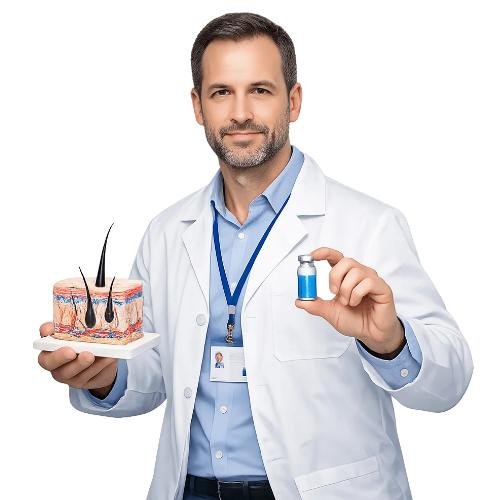
Hair loss is a common experience that affects millions of people worldwide, and it can happen for many reasons — including genetics, hormonal changes, stress, aging, or lifestyle factors. As awareness grows, so does interest in understanding what treatment options exist today and what researchers are exploring for the future.
This article provides an overview of emerging areas of hair loss research and commonly discussed approaches. It is not intended to provide medical advice or replace guidance from a qualified healthcare professional.
Understanding Hair Loss at a High Level
Hair loss can present in different forms, such as gradual thinning, receding hairlines, or patchy shedding. The most common type is androgenetic alopecia, often referred to as male or female pattern hair loss. Other forms may be temporary or related to lifestyle, health conditions, or environmental factors.
Because causes vary, no single approach works for everyone, which is why ongoing research continues to explore multiple directions rather than a single “solution.”
Current Approaches People Commonly Explore
Before looking ahead, it helps to understand the types of options people already discuss or explore today:
-
Topical treatments applied directly to the scalp
-
Oral medications prescribed under medical supervision
-
Procedural options, such as hair restoration techniques
-
Lifestyle adjustments, including stress management, nutrition, and hair-care routines
Each of these approaches has limitations, benefits, and suitability depending on individual circumstances.
Emerging Therapies to Watch
Scientists are making headway on treatments that go beyond masking symptoms to actually repairing and reactivating hair follicles. Some of the most talked-about approaches include:
-
PRP & Polynucleotide Injections – Using growth factors from your own blood, or DNA fragments that encourage cellular repair, these treatments aim to “wake up” dormant follicles. Curious how they stack up against at-home options? See our comparison: PRP Hair Growth vs Amazon Alternatives.
-
Exosome Therapy – Tiny vesicles that transfer regenerative signals between cells, showing promise in early trials.
-
Stem Cell Research – Still experimental, but early results suggest lab-grown hair follicles may one day be a reality.
-
Low-Level Laser Therapy (LLLT) – Laser caps and combs that use light to stimulate blood flow in the scalp. Many at-home devices are already available on Amazon’s hair restoration listings.
Amazon’s Trending “Next-Gen” Hair Products
While clinic treatments evolve, Amazon is filling the gap with consumer-friendly options inspired by the same science.
| Product | Key Innovation | Why It’s Trending | Amazon Link |
|---|---|---|---|
| iRestore Professional Laser Hair Growth System | FDA-cleared laser helmet for LLLT | A popular at-home device with strong reviews | View on Amazon |
| Theradome EVO Laser Hair Helmet | Advanced laser therapy for scalp circulation | Often compared to in-office laser treatments | View on Amazon |
| Nutrafol Hair Growth Nutraceuticals | Clinically tested adaptogen + vitamin blend | Holistic approach linking stress, hormones & hair health | View on Amazon |
| The Ordinary Multi-Peptide Serum for Hair Density | Cutting-edge peptide technology | Affordable, lab-driven innovation for follicle stimulation | View on Amazon |
| Ultrax Labs Hair Surge Caffeine Shampoo | Caffeine + ketoconazole blend | Taps into lab studies on DHT-blocking for regrowth | View on Amazon |
Areas of Research Shaping the Future of Hair Loss Treatments
Rather than focusing on guaranteed outcomes, researchers are studying several promising directions. These areas are still evolving and are typically discussed in scientific or clinical contexts.
1. Regenerative and Stem Cell Research
Some research is examining how hair follicles regenerate and whether stem-cell-based approaches could support follicle activity. This area remains experimental and is primarily explored in laboratory or clinical research settings.
2. Platelet-Based Therapies
Platelet-rich plasma (PRP) has gained attention as an area of study for hair thinning. Researchers continue to evaluate how growth factors may influence scalp health and follicle function under medical supervision.
3. Low-Level Light and Laser Technology
Light-based devices are being studied for their potential to stimulate scalp circulation and follicle activity. These technologies are non-invasive and continue to be evaluated for effectiveness and consistency.
4. Personalized and Genetic-Focused Approaches
Advancements in genetic research are helping scientists better understand why individuals respond differently to treatments. In the future, this may support more personalized recommendations based on genetic or hormonal factors.
5. Improved Delivery Systems
Researchers are also exploring better ways to deliver existing ingredients — such as improved absorption methods, scalp-friendly formulations, or combination approaches that focus on comfort and consistency.


