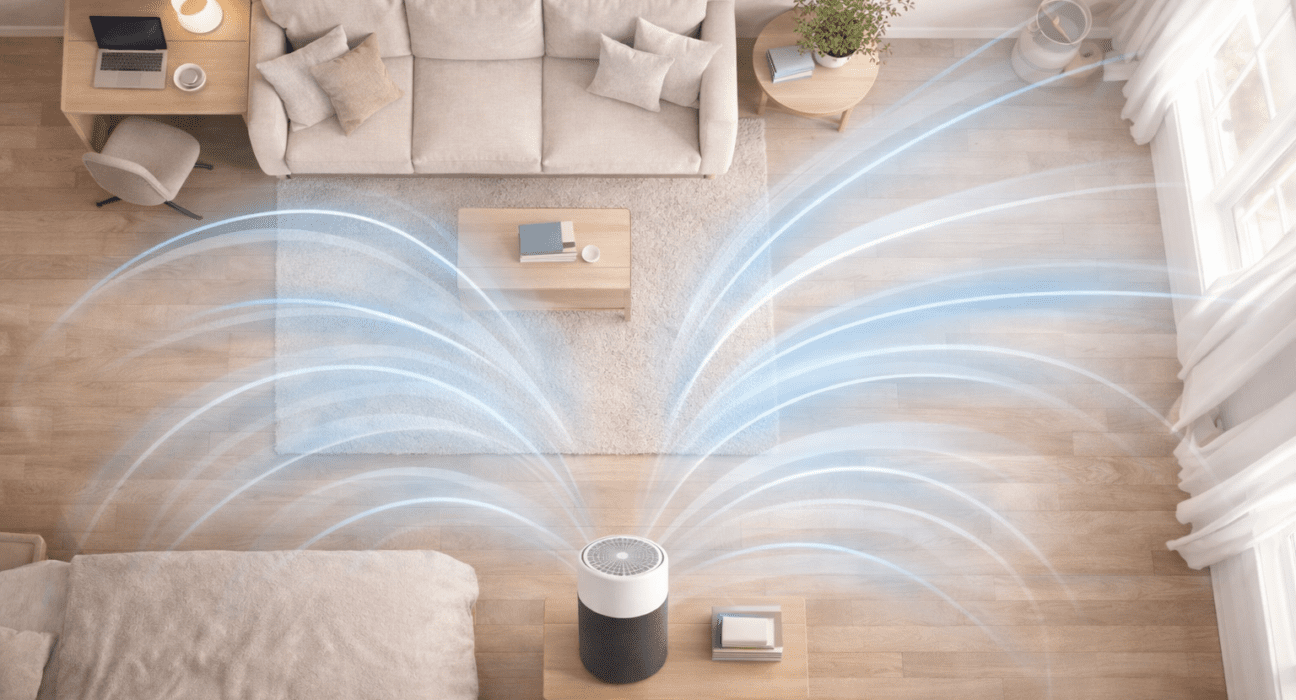
Choosing the right air purifier isn’t just about features or brand, room size plays a major role in how well a purifier performs. A unit that works perfectly in a bedroom may struggle in a larger living space.
When you understand how coverage, airflow, and placement affect performance, you can avoid choosing a unit that’s either underpowered or unnecessarily large.
Why Room Size Matters
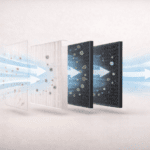
Air purifiers pull air through filters and circulate it back into the room to reduce airborne particles.
- It won’t cycle air efficiently
- Pollutants remain in the room longer
- Overall air quality improvement is limited
On the other hand, a properly sized unit can maintain consistent airflow and improve indoor air conditions more effectively.
Understanding Coverage Ratings
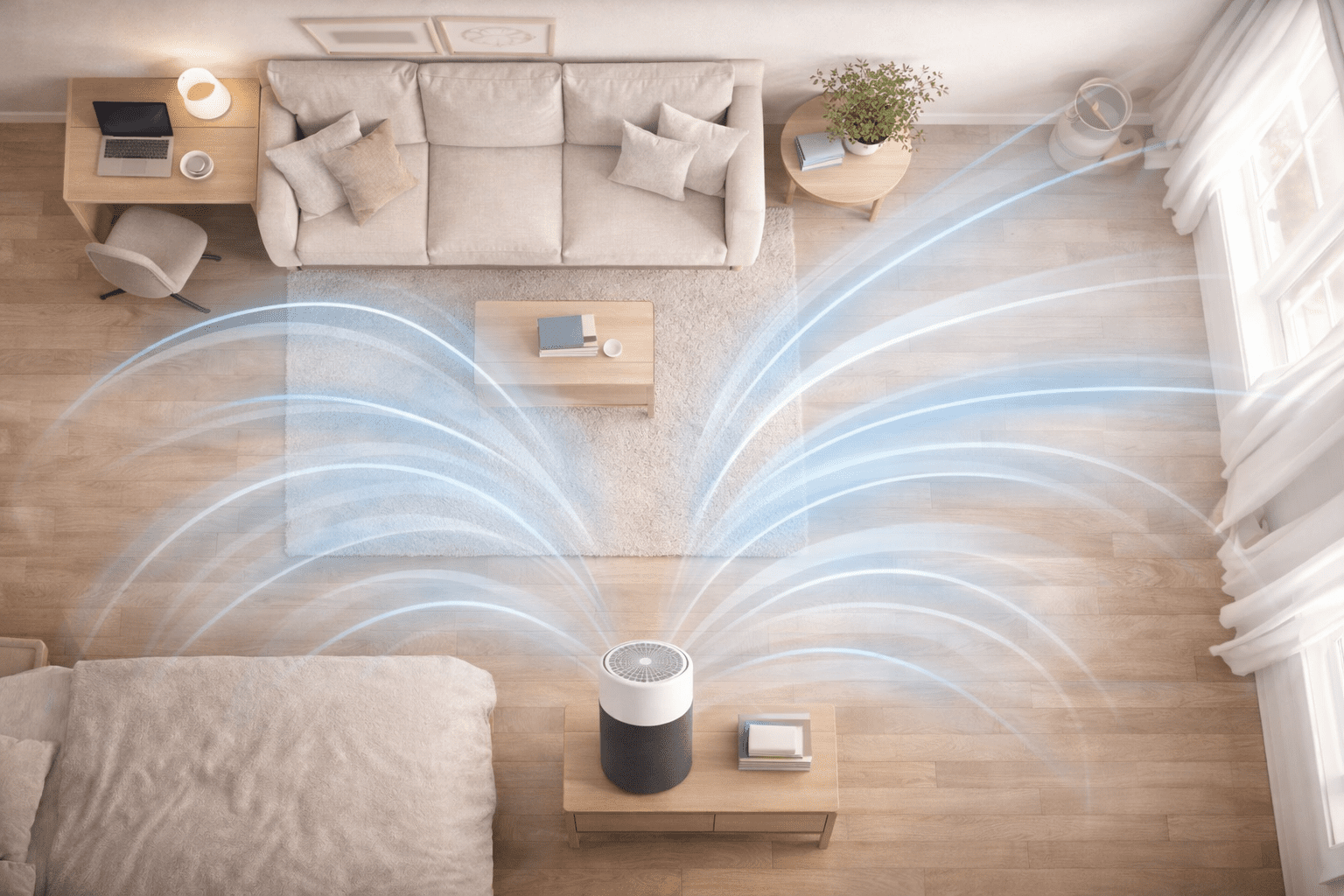
Most air purifiers specify a recommended room size, usually in square feet or square meters. This number is based on how quickly the purifier can cycle air through its system.
To understand performance ratings, focus on:
- Airflow rate – how much air the unit can process
- CADR (Clean Air Delivery Rate) – how effectively it removes particles
- Air changes per hour (ACH) – how often the air is refreshed
For example, a unit rated for 200–300 square feet is typically suitable for small bedrooms or offices.
Matching Purifier Size to Your Space
Small Rooms (up to ~200 sq ft)
Best for:
- Bedrooms
- Home offices
- Dorm rooms
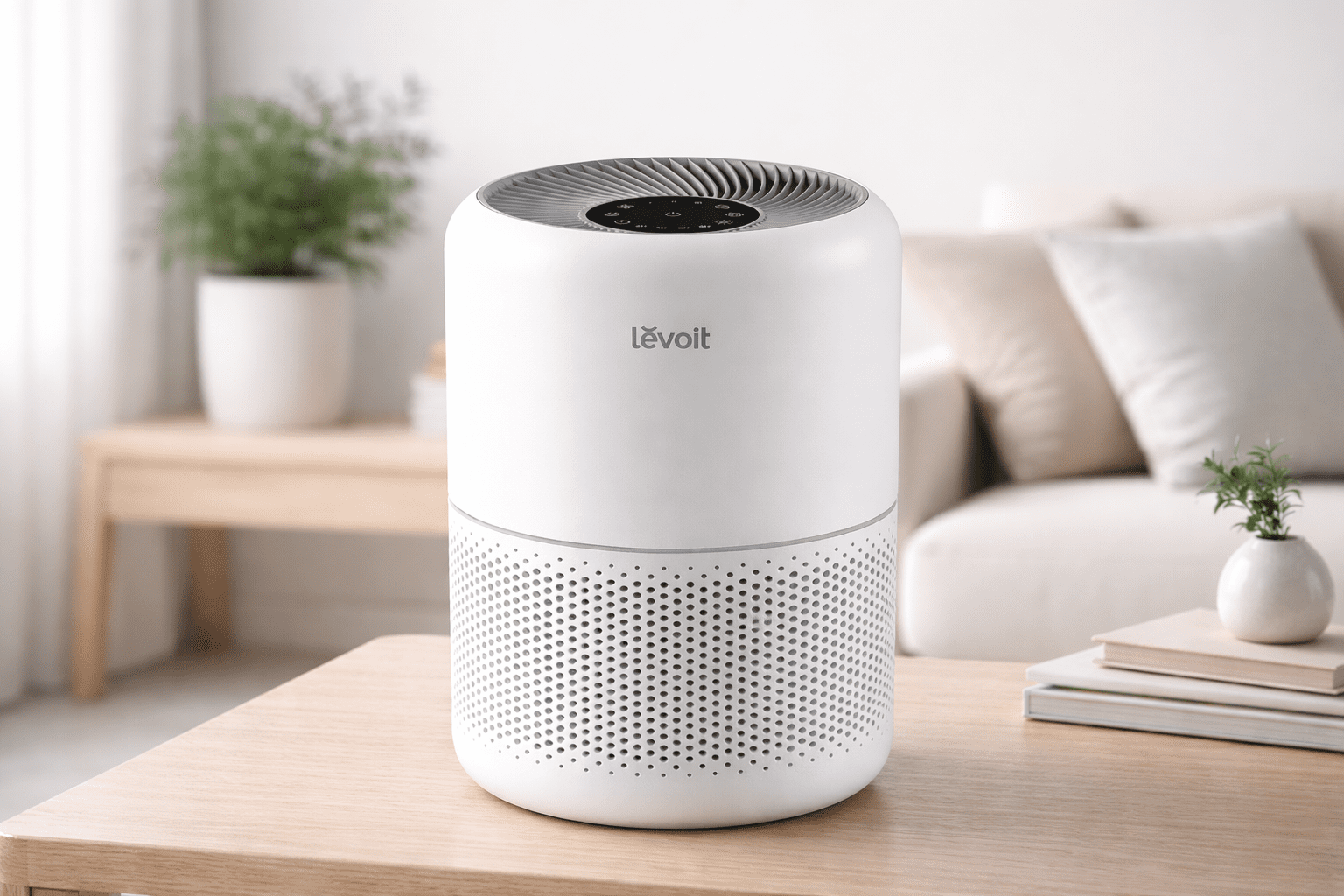
Compact units like the Levoit Core 300 Air Purifier or Blueair Blue Pure 411 Air Purifier are often sufficient for these environments.
Medium Rooms (200–400 sq ft)
Best for:
- Living rooms
- Larger bedrooms
- Studio apartments
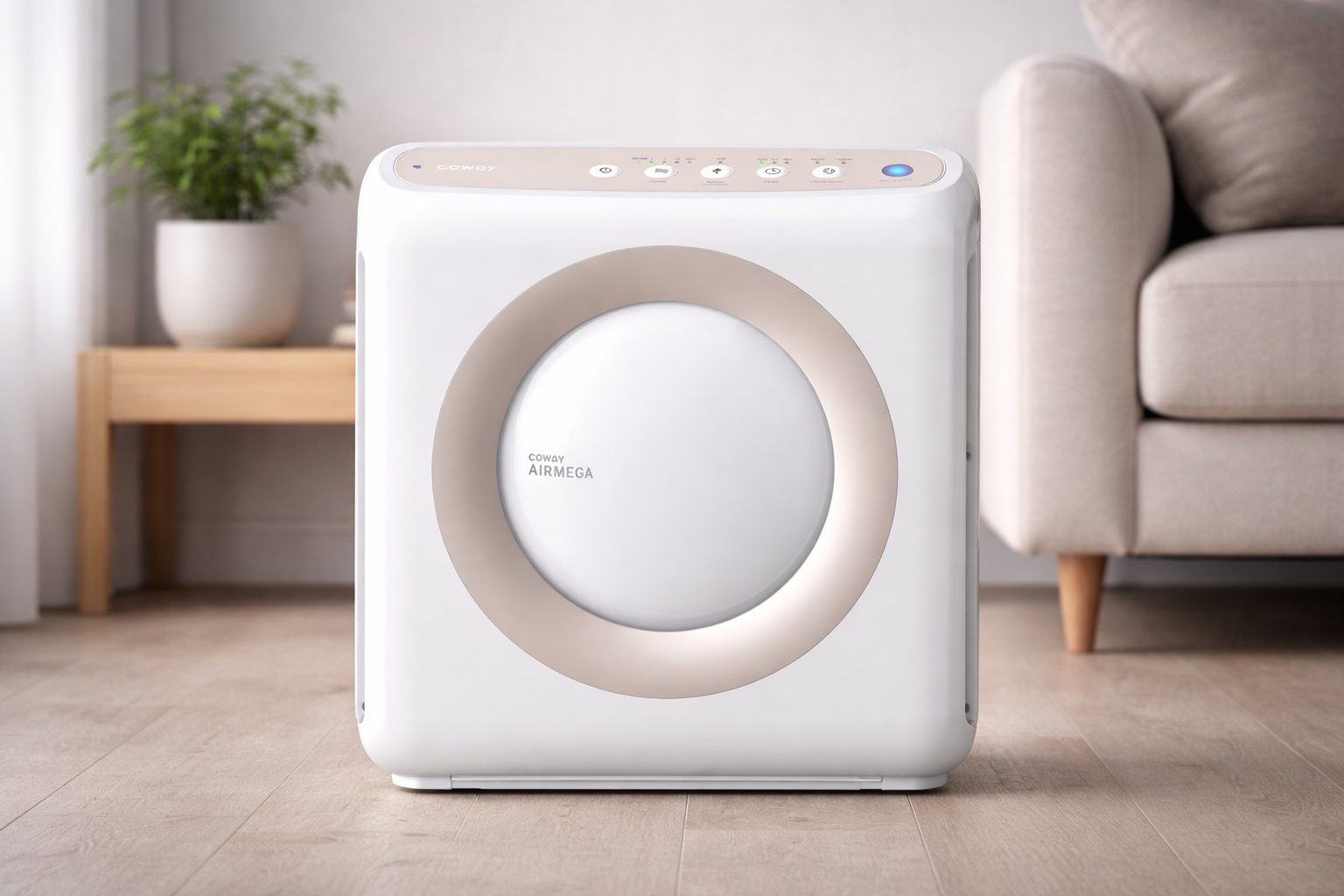
Models such as the Coway Airmega AP-1512HH Air Purifier provide stronger airflow and better coverage for these spaces.
Large Rooms (400+ sq ft)
Best for:
- Open floor plans
- Combined living and dining areas
- Large family rooms
These spaces require air purifiers with higher airflow and advanced filtration to effectively clean larger volumes of air. Look for models with a coverage rating that meets or exceeds your room size, especially if you have pets, allergies, or high ceilings.
Recommended: Compare top-rated air purifiers designed for rooms over 400 square feet, featuring True HEPA filtration, strong CADR ratings, and smart air quality monitoring. Learn more about HEPA and carbon filters and how they affect air purifier performance before choosing a model.
You can compare prices and customer reviews for the best-rated air purifiers for large rooms on Amazon.
Placement Makes a Difference
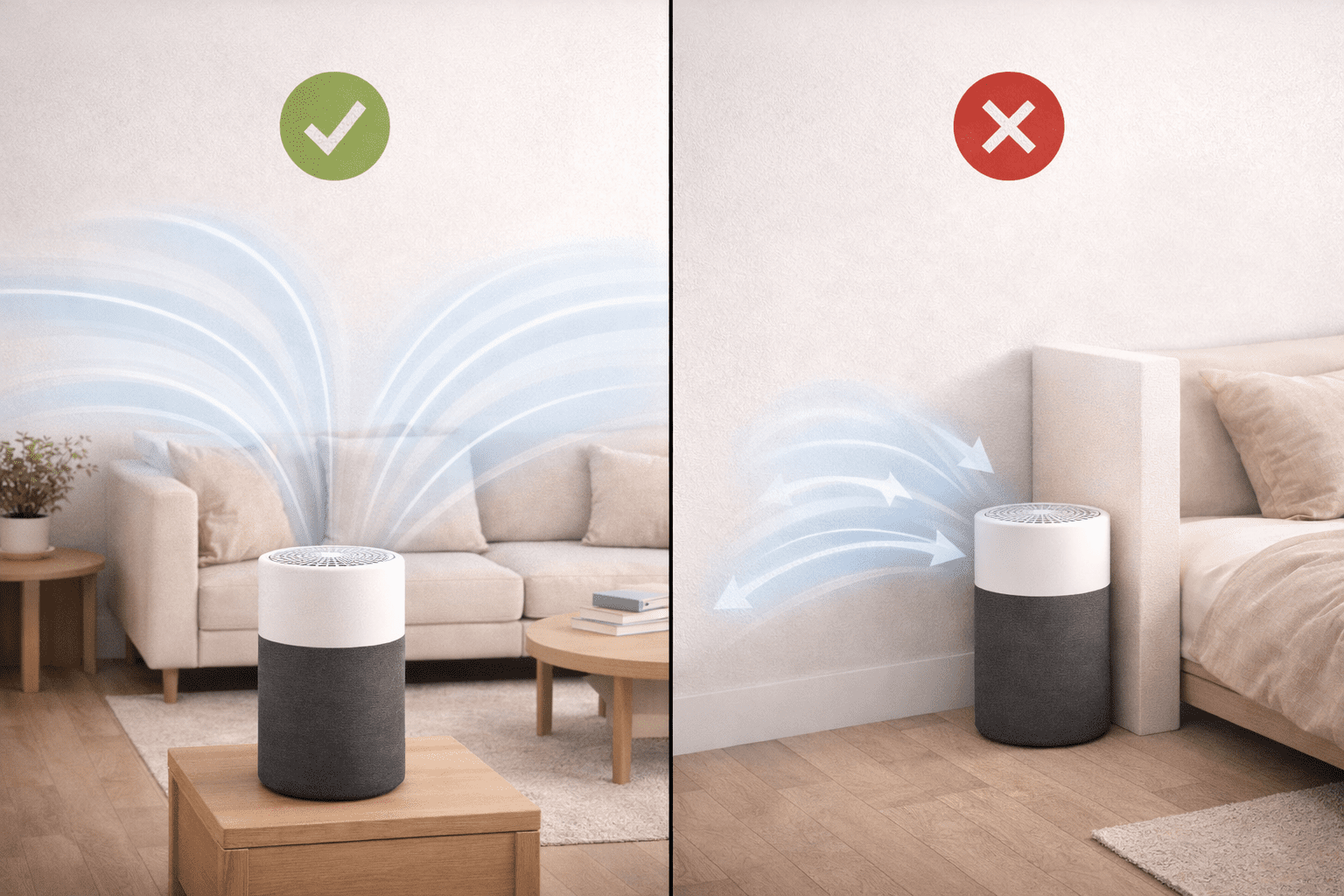
Even the right-sized purifier won’t perform well if it’s placed incorrectly.
For best results:
- Keep it away from walls or large obstacles
- Place it where airflow can circulate freely
- Avoid corners that block air intake
Proper placement allows the unit to distribute clean air evenly across the room.
Choosing Based on Your Needs
Room size is the starting point, but your specific situation also matters.
Consider:
- Allergies or pets → may require stronger filtration
- Dust levels → need consistent airflow
- Noise sensitivity → choose quieter models for bedrooms
Combining air purification with regular vacuuming and dust control can further improve indoor air quality by reducing particles at the source. Keeping floors and upholstery clean helps limit airborne dust, especially in high-traffic areas.
You can explore practical cleaning options in our Best Cordless Handheld Vacuum Cleaners for Quick Home Cleaning guide.
Common Mistakes to Avoid
- Choosing a purifier that’s too small for the room
- Ignoring airflow and placement
- Relying only on brand instead of specifications
- Expecting instant results instead of gradual improvement
Final Takeaway
Selecting the right air purifier starts with understanding your room size and matching it with the appropriate coverage and airflow.
A well-matched unit can maintain cleaner air consistently, while an undersized one may struggle to deliver noticeable results. Taking a few minutes to evaluate your space can make a significant difference in long-term performance.