For many households, improving drinking water starts with a simple question: should you use a water filter pitcher or install a faucet filter?
Both options are popular because they help improve everyday drinking water without requiring expensive whole-home systems, yet they work differently in terms of convenience, maintenance, kitchen setup, and long-term daily use.
Some people prefer the flexibility and simplicity of a water filter pitcher, while others like the faster access and continuous filtration that faucet-mounted systems provide.
Understanding how these two filtration styles compare can make it much easier to choose the option that fits your kitchen, routine, and water usage habits more naturally.
If you’re still learning how pitcher filtration works overall, you can also read How Water Filter Pitchers Work and What They Actually Remove.
Water Filter Pitchers Focus on Simplicity and Flexibility
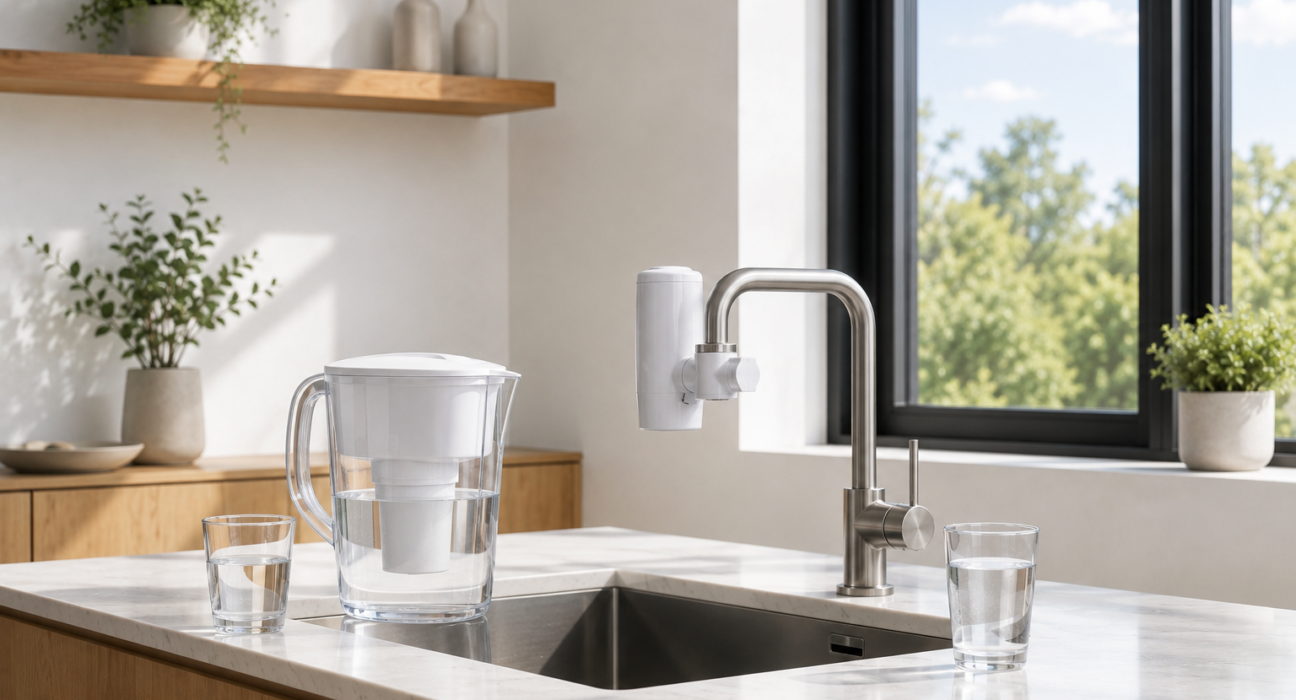
Water filter pitchers are designed to work without installation, plumbing changes, or tools, which makes them especially popular in apartments, dorms, smaller kitchens, and rental homes where permanent modifications may not be practical.
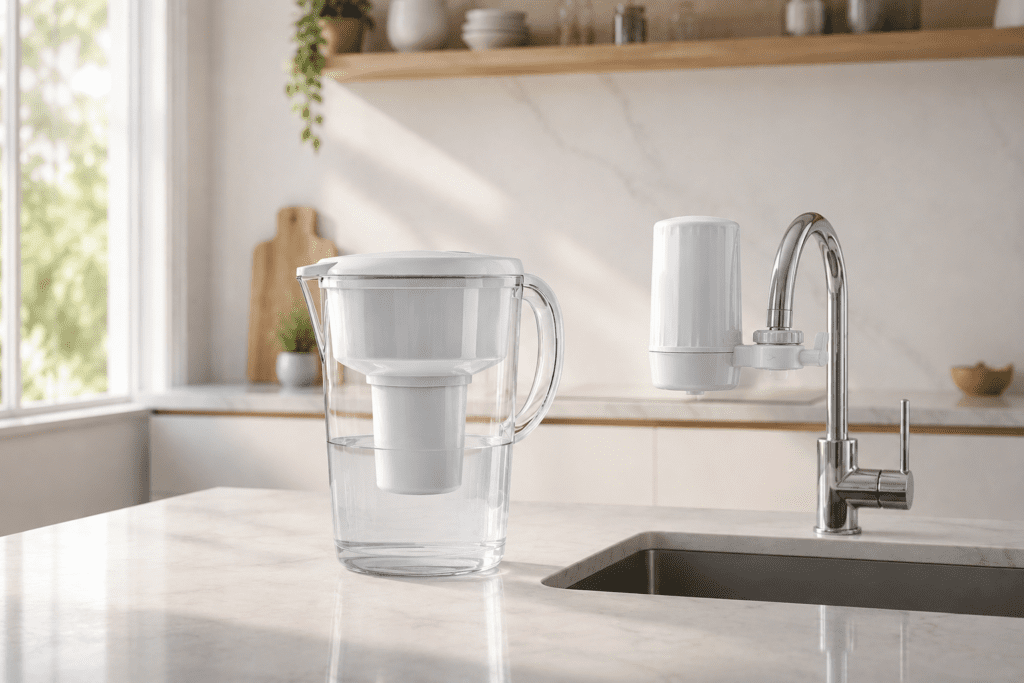
Most pitchers use gravity filtration, allowing water to slowly pass through a replaceable filter before collecting in the lower reservoir for drinking.
Many households choose pitchers because they:
- are easy to move
- fit inside refrigerators
- require minimal setup
- work well for smaller daily water needs
- typically cost less upfront
For people who mainly want better-tasting drinking water without changing kitchen fixtures, pitchers often feel like the simplest starting point. If you’re still comparing models, capacities, and everyday features, you can also explore Best Water Filter Pitchers for Everyday Home Use for a broader overview of commonly used options.
Faucet Filters Provide Faster Continuous Access
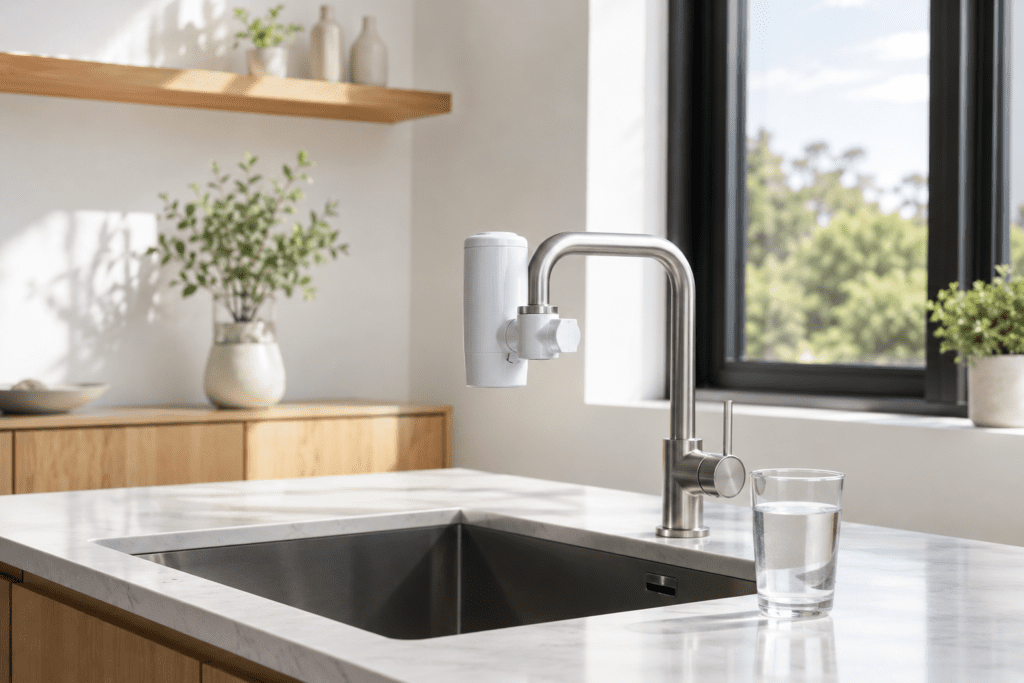
Faucet-mounted filters connect directly to the kitchen faucet, allowing water to filter immediately while flowing through the tap.
This setup can feel more convenient for households that use filtered water frequently throughout the day because there is no waiting period for water to slowly pass through a pitcher reservoir.
Many faucet filter users prefer:
- faster access to filtered water
- continuous filtration during cooking
- larger daily filtration capacity
- fewer refills compared to pitchers
However, faucet filters usually require basic installation compatibility, and not every sink design supports every model equally well.
Kitchen Space Can Influence the Better Choice
One major difference between these two options is how they fit into everyday kitchen space.
Water filter pitchers take up refrigerator or countertop space, which may become inconvenient in smaller kitchens with limited storage capacity.
Faucet filters, on the other hand, stay attached directly to the sink, which saves refrigerator space but may slightly change the appearance or feel of the faucet itself.
For households prioritizing compact kitchen organization, the better option often depends on whether counter space or refrigerator space is more limited.
If space-saving matters most, you can also read How to Choose a Water Filter Pitcher for Small Kitchens and Apartments.
Filtration Speed Feels Different in Daily Use
One of the biggest everyday differences between these systems is filtration speed.
Pitchers filter water gradually, which means households sometimes need to refill and wait before more filtered water becomes available.
That slower pace usually works fine for:
- individuals
- couples
- light daily drinking use
Faucet filters often feel more practical in larger households where multiple people use filtered water throughout the day for:
- cooking
- water bottles
- coffee machines
- meal preparation
The convenience difference becomes more noticeable as overall water usage increases.
Maintenance Requirements Are Similar but Not Identical
Both filtration systems require regular filter replacement to maintain performance, although maintenance routines feel slightly different in practice.
Pitcher filters are usually simple to remove and replace, but households must remember to refill the reservoir consistently.
Faucet filters eliminate refilling, although they may require occasional cleaning around the attachment area depending on water conditions and mineral buildup.
In both cases, older filters can eventually reduce:
- taste improvement
- filtration speed
- odor reduction performance
If you’re unsure how often filters should be changed, you can also read How Often Should You Replace a Water Filter Pitcher Filter?
Water Taste Improvement Often Feels Similar
For many households, both systems noticeably improve:
- chlorine taste
- odor
- overall drinking experience
The exact difference depends more on the filter type and certification standards than the filtration style itself. Many households first start researching filtration after noticing chlorine odor, metallic taste, or unusual smell changes in tap water. If that sounds familiar, you can also read Tap Water Taste Explained: Why Water Smells or Tastes Different.
Some advanced pitchers remove a wider range of contaminants than certain faucet filters, while some premium faucet systems outperform basic pitchers.
That’s why comparing specific filter capabilities matters more than assuming one category is automatically better than the other.
Some Households Prefer Combining Both
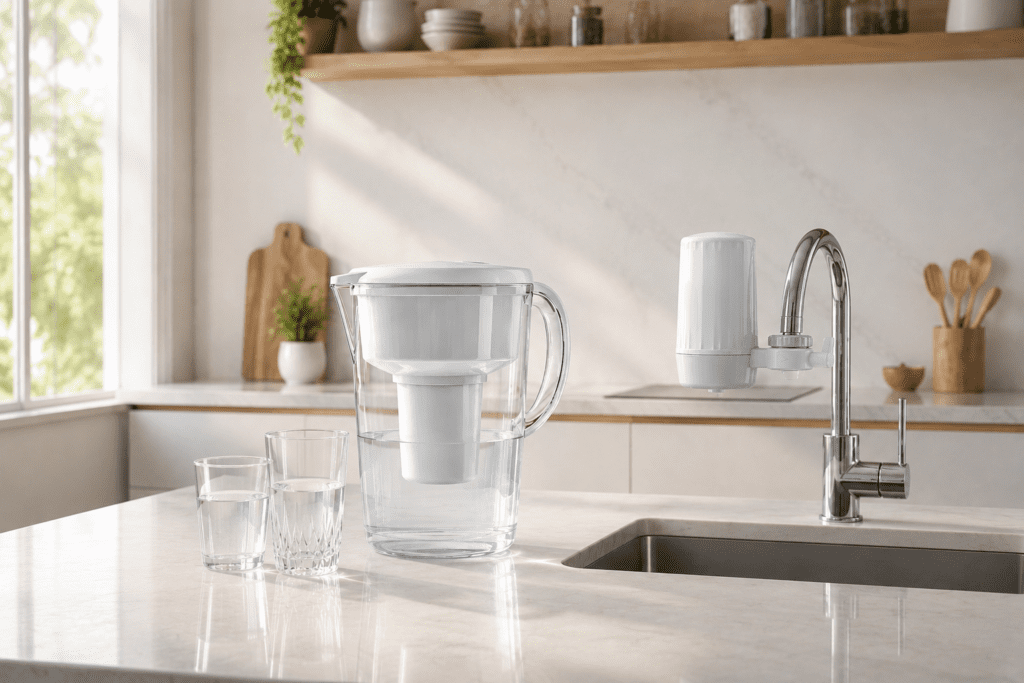
In some homes, people actually use both systems together for different purposes.
For example:
- faucet filters for cooking and daily filling
- pitchers for refrigerated cold drinking water
This approach can work well for larger households where convenience and storage flexibility both matter.
Because filtration needs vary so much between homes, the “better” option often depends more on lifestyle habits than on filtration style alone.
Choosing the Right Option Depends on Everyday Routine
People who prioritize portability, simplicity, and low setup usually prefer water filter pitchers, especially in apartments or smaller kitchens where flexibility matters more than high-capacity filtration.
Households that use larger amounts of filtered water throughout the day may find faucet filters more convenient because they provide faster direct access without repeated refilling.
Neither system is automatically perfect for every home, which is why understanding your own kitchen routine often matters more than choosing whichever option seems more advanced.
Both Filtration Styles Can Improve Everyday Drinking Water
Water filter pitchers and faucet filters both offer practical ways to improve everyday drinking water without requiring complicated installations or large filtration systems.
For many households, the best option comes down to kitchen space, daily water usage, convenience preferences, and how simple they want ongoing maintenance to feel over time.
Choosing the right setup becomes much easier once filtration is viewed as part of everyday routine rather than just a product comparison.