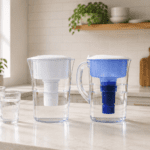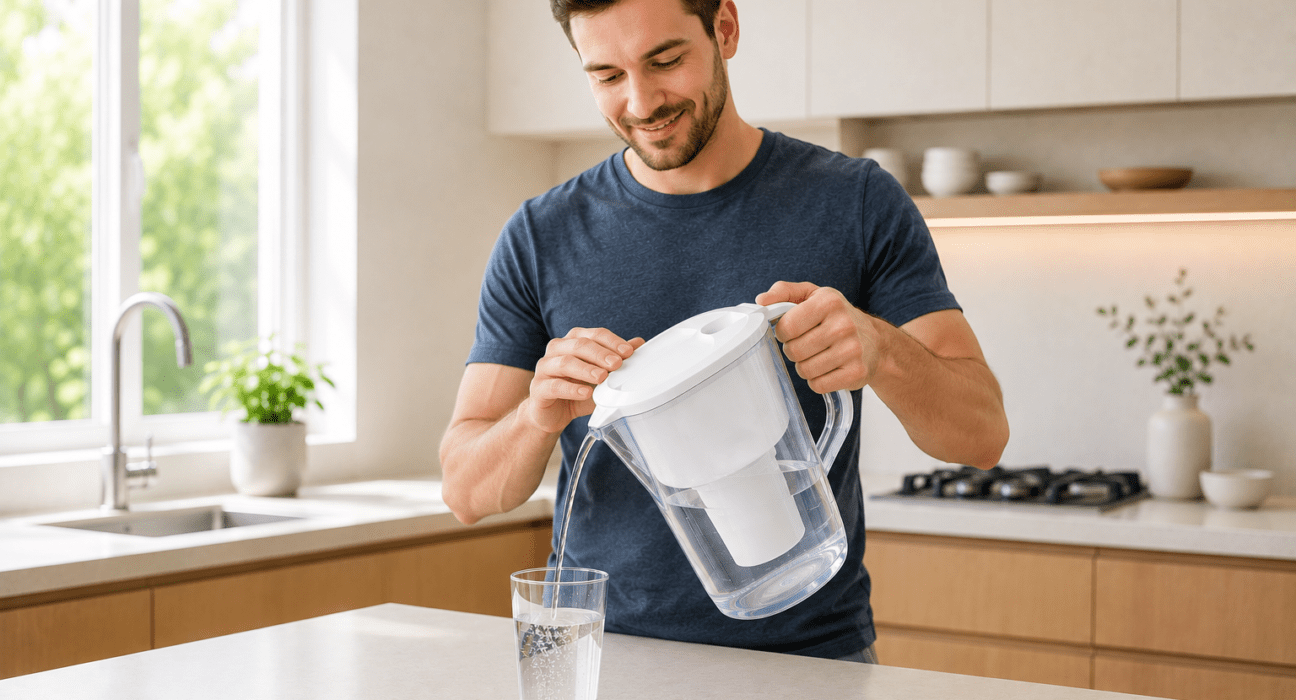
Water filter pitchers have become one of the simplest ways to improve everyday drinking water at home.
For many households, they offer an easy way to reduce unwanted taste, improve water clarity, and make tap water feel cleaner without installing large filtration systems.
But many people still wonder what these pitchers actually do and whether they remove anything meaningful from drinking water.
The answer depends on the type of filter, the materials used inside it, and the specific contaminants being targeted.
Understanding how water filter pitchers work can help you choose the right option for your kitchen and set more realistic expectations about what filtration can and cannot do.
If you’ve recently noticed unusual taste or odor in your water, you can also read Tap Water Taste Explained: Why Water Smells or Tastes Different.
How Water Filter Pitchers Actually Work
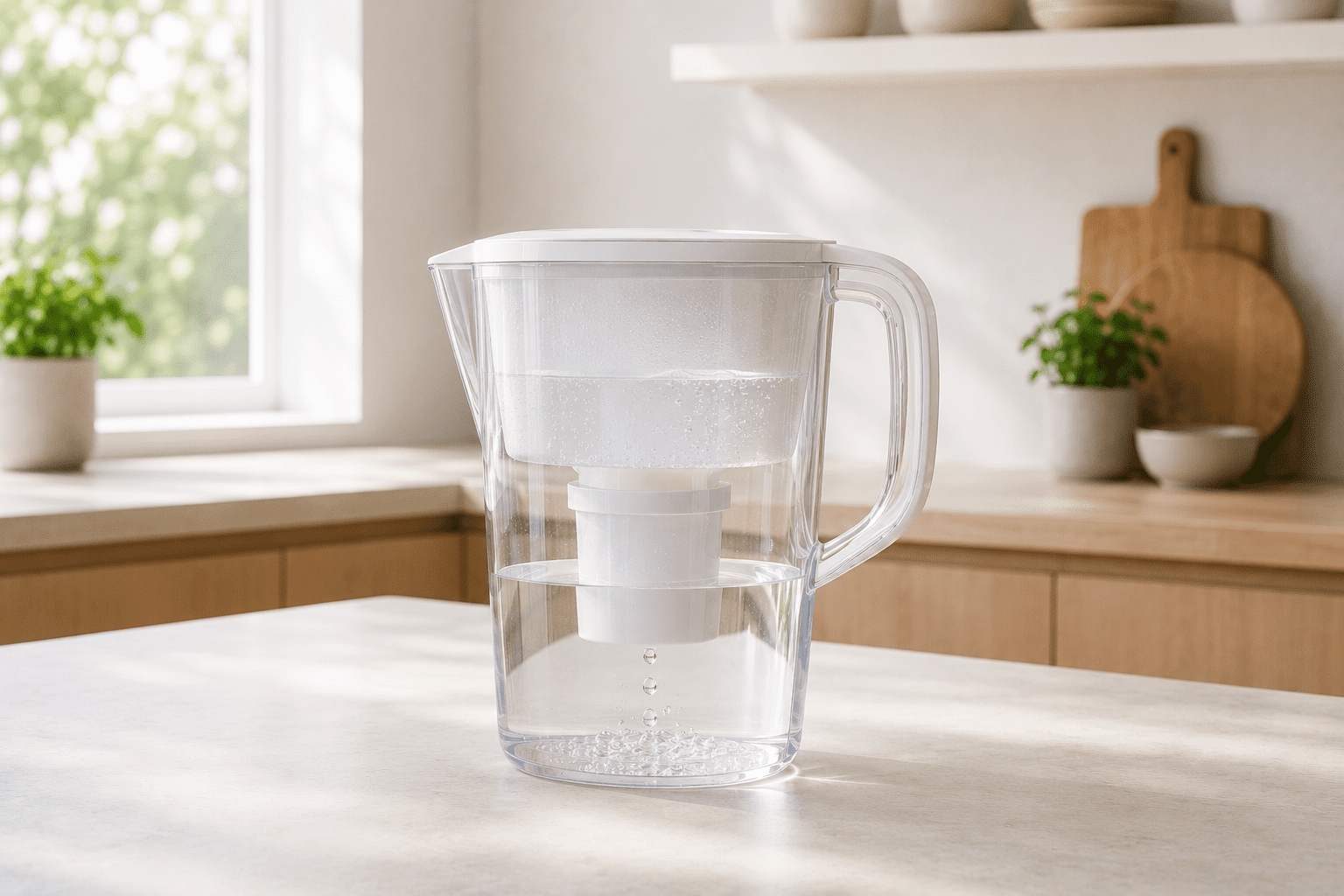
Most water filter pitchers rely on gravity filtration. When water is poured into the upper reservoir, it slowly passes through a built-in filter before collecting in the lower chamber ready for drinking.
Inside the filter, different materials help reduce certain impurities commonly found in tap water.
The most common filtration materials include:
- activated carbon
- ion exchange resin
- fine mesh filtration layers
Each layer serves a slightly different purpose depending on the pitcher design.
Activated Carbon Plays the Biggest Role
Activated carbon is one of the main components inside many water filter pitchers. This material contains a highly porous surface that helps trap certain compounds as water flows through it.
Activated carbon is commonly used to help reduce:
- chlorine taste
- unpleasant odors
- some volatile organic compounds (VOCs)
- certain sediment particles
This is one reason filtered water often tastes smoother or fresher compared to untreated tap water. Many households first notice improvements in smell and taste rather than dramatic visual differences.
Some Filters Also Reduce Heavy Metals
Certain pitcher filters include ion exchange materials designed to help reduce some dissolved metals found in tap water.
Depending on the filter type, this may include partial reduction of:
- lead
- copper
- mercury
- zinc
Not every pitcher removes the same substances, which is why certification standards and manufacturer specifications matter.
Some basic filters focus mainly on taste and odor, while more advanced models target a broader range of contaminants.
What Water Filter Pitchers Usually Do Not Remove
Water filter pitchers can improve everyday drinking water, but they are not designed to remove everything.
Standard pitcher filters typically do not fully remove:
- bacteria
- viruses
- dissolved salts
- all pharmaceuticals
- all industrial contaminants
- extremely high mineral content
This is important because many people assume all filtration systems work the same way.
Pitchers are generally designed for improving municipal tap water quality, not replacing specialized purification systems.
Why Filter Replacement Matters
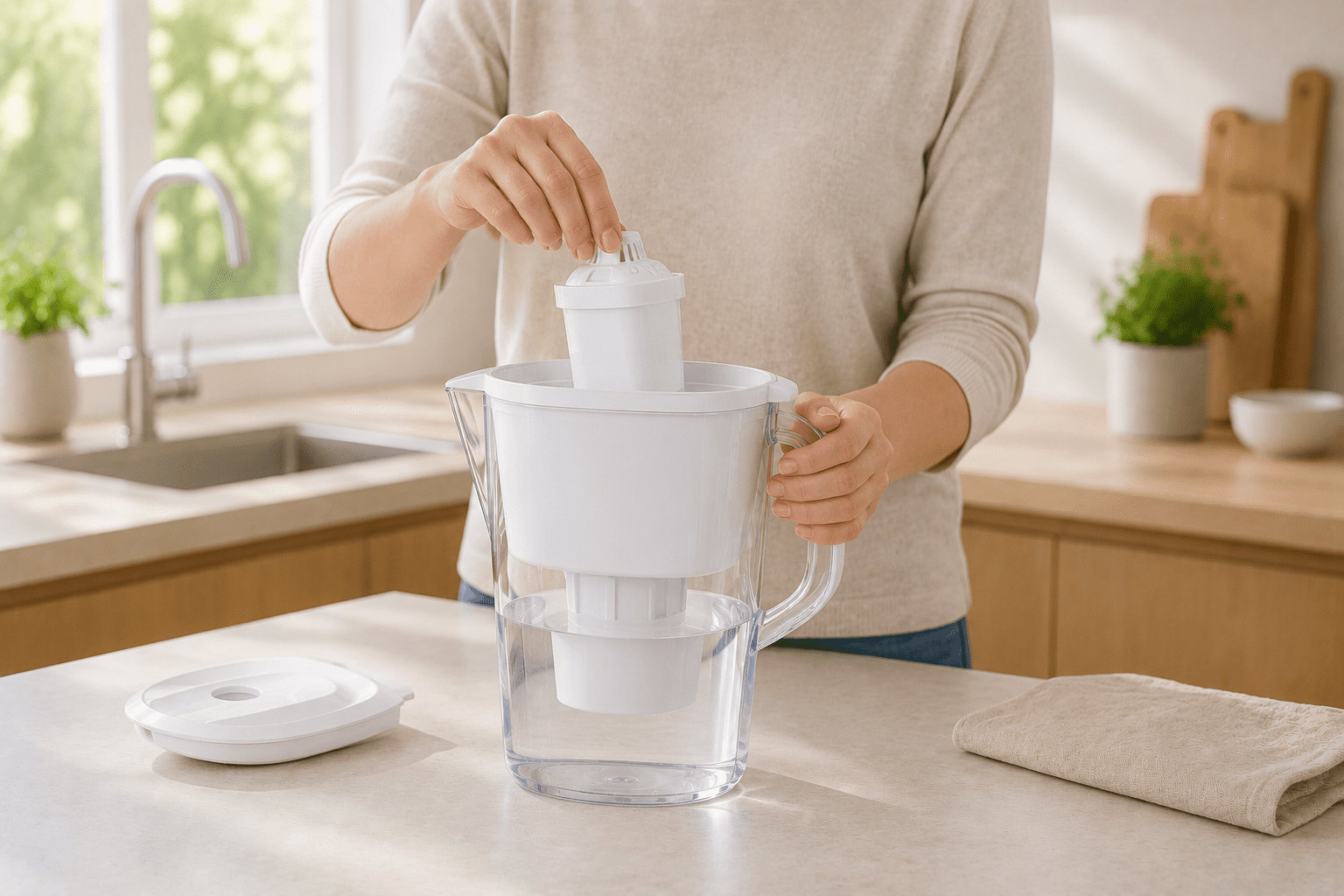
Even the best water filter pitcher becomes less effective if the filter is not replaced regularly.
Over time, filtration materials gradually lose their ability to trap contaminants and reduce odors effectively.
Old filters may also slow water flow significantly.
Replacement timing depends on:
- water quality
- household usage
- pitcher size
- manufacturer recommendations
Some households replace filters more often if they notice:
- chlorine taste returning
- slower filtration
- unusual odor changes
- cloudy appearance
If you want to understand maintenance more clearly, you can also read How Often Should You Replace a Water Filter Pitcher Filter?
Filtered Water Often Improves Taste More Than Appearance
One common misconception is that filtered water should always look dramatically different.
In many cases, the biggest improvement is actually taste consistency.
People often notice:
- less chlorine smell
- smoother taste
- cleaner aftertaste
- reduced metallic flavor
- fresher drinking experience
The difference may seem subtle at first, but many households quickly notice when they switch back to unfiltered tap water afterward.
Water Quality Still Depends on the Source
Even a good filter pitcher works best when starting with reasonably treated municipal water.
Local water quality can vary based on:
- infrastructure
- plumbing systems
- seasonal conditions
- source reservoirs
- treatment methods
That’s one reason two homes using the same pitcher may still experience slightly different results.
If you’re trying to understand why your water sometimes changes taste or smell, it may help to first identify what’s affecting the supply itself before choosing filtration.
Some Homes Benefit More From Filtration Than Others
Water filter pitchers are especially popular in homes where people notice:
- chlorine odor
- metallic taste
- inconsistent flavor
- visible sediment
- older plumbing concerns
They’re also convenient for:
- apartments
- dorm rooms
- renters
- small kitchens
- households avoiding larger installations
Because pitchers require no plumbing changes, many people use them as a simple starting point before considering more advanced systems later.
Water Filter Pitchers Help Create More Consistent Drinking Water
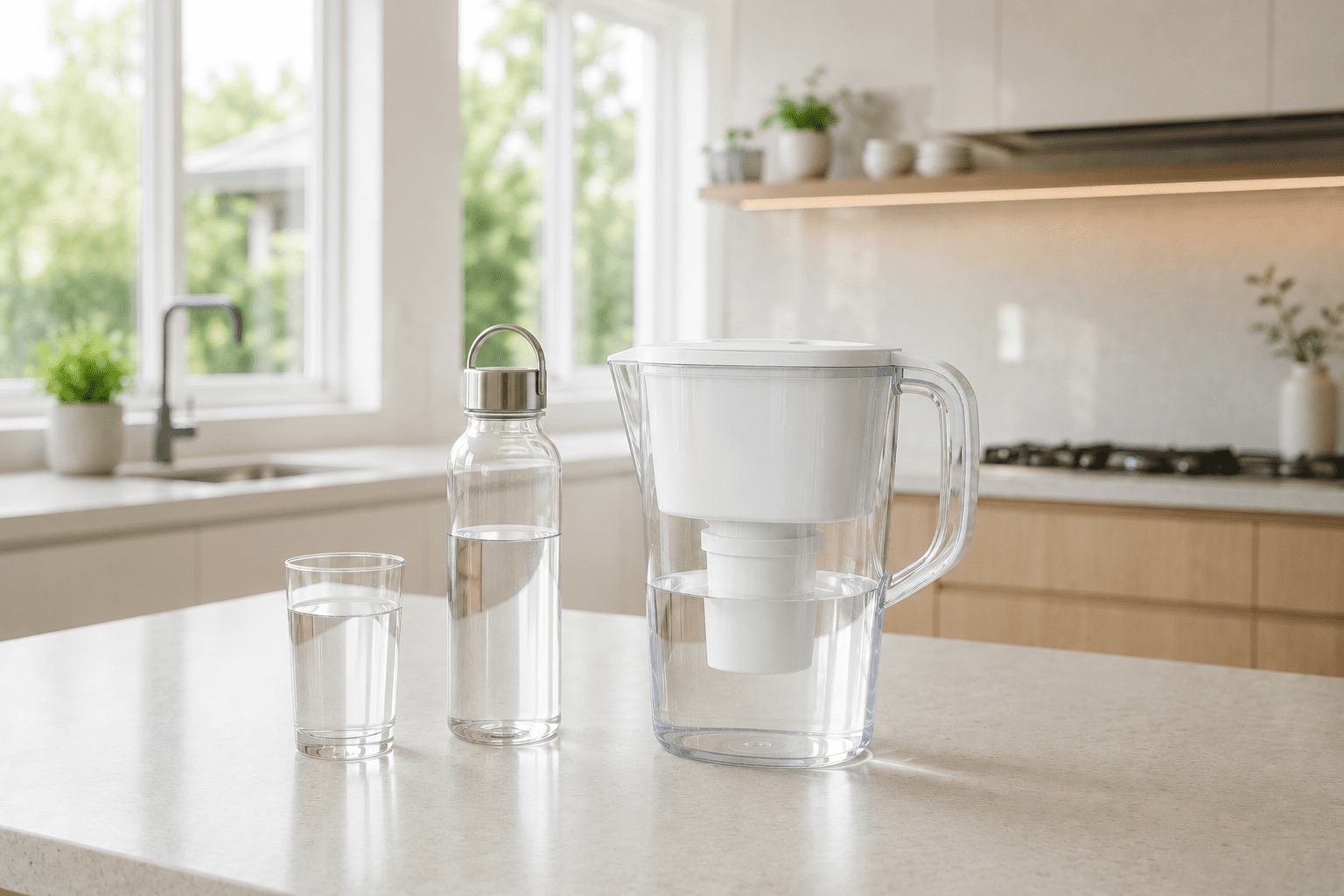
Water filter pitchers are not designed to solve every water quality issue, but they can make everyday drinking water taste cleaner and feel more consistent for many households.
Understanding what they actually remove helps set better expectations and makes comparing filtration options much easier.
For many people, the biggest benefit is simply creating a more pleasant daily drinking experience without complicated installation or maintenance.
Related Readings
- Best Water Filter Pitchers for Everyday Home Use
- Water Filter Pitcher vs Faucet Filter: Which Fits Everyday Use Better?
- How to Choose a Water Filter Pitcher for Small Kitchens and Apartments