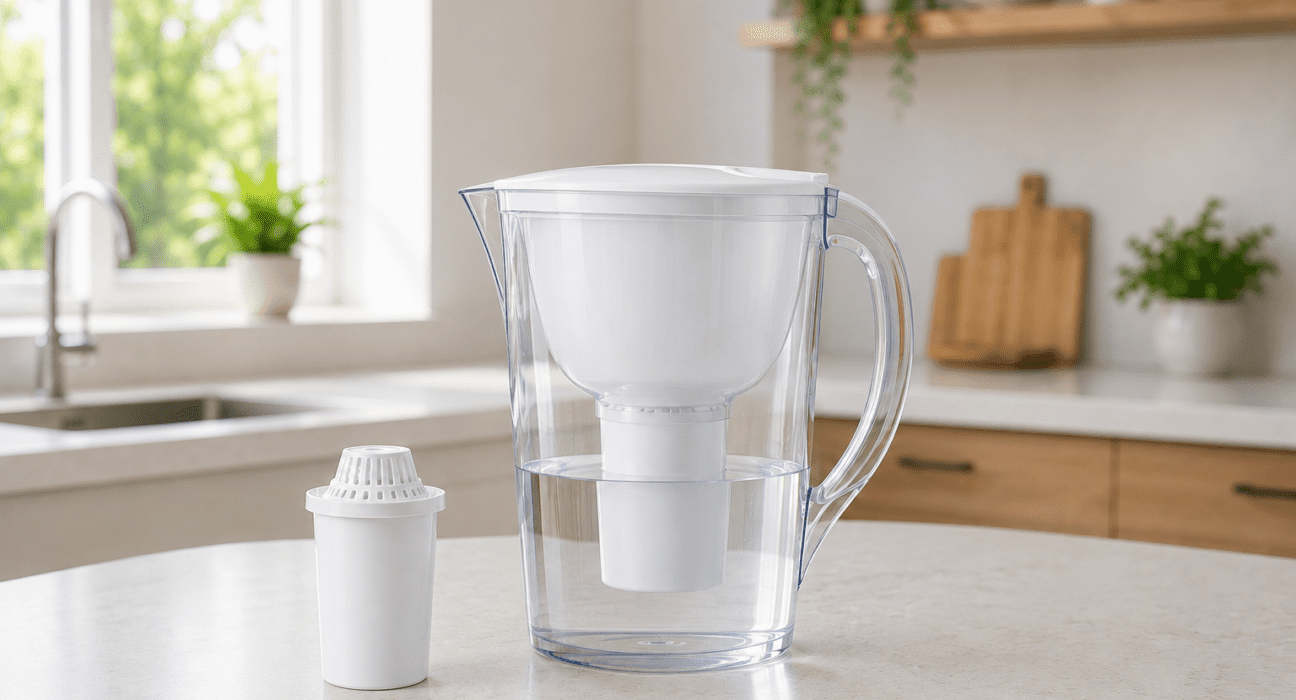
Many people buy a water filter pitcher expecting cleaner-tasting drinking water, but the filter itself is what actually does the work. Over time, that filter gradually becomes less effective as it traps particles, absorbs odors, and processes everyday tap water. That’s why replacing the filter regularly matters just as much as choosing the pitcher itself.
A filter that stays in use for too long may not improve taste as effectively and can sometimes reduce water flow significantly. Understanding when and why to replace a water filter pitcher filter helps maintain more consistent drinking water quality without overcomplicating daily routines.
If you’re still learning how pitcher filtration works overall, you can also read How Water Filter Pitchers Work and What They Actually Remove.
Why Water Filter Pitchers Need Regular Filter Changes
Inside most pitcher filters are materials like activated carbon and ion exchange resin.
These materials help reduce:
- chlorine taste
- odors
- some sediment
- certain dissolved metals
As water repeatedly passes through the filter, those materials slowly lose their effectiveness.
The filter does not suddenly stop working overnight. Instead, performance gradually declines over time.
Many households first notice:
- weaker taste improvement
- slower water flow
- unusual odor returning
- less fresh-tasting water
This is usually a sign the filter may be nearing replacement time.
Most Filters Follow a General Replacement Range
The exact lifespan depends on the filter model and household water usage, but many standard pitcher filters are commonly replaced every:
- 1 to 2 months or
- after filtering a specific number of gallons
Some larger or advanced filters last longer than basic entry-level versions. Homes with heavier water usage often replace filters more frequently than smaller households.
Factors that affect lifespan include:
- number of people in the home
- local water quality
- sediment levels
- chlorine concentration
- daily water consumption
Because conditions vary, manufacturer recommendations are usually designed as general guidelines rather than strict rules.
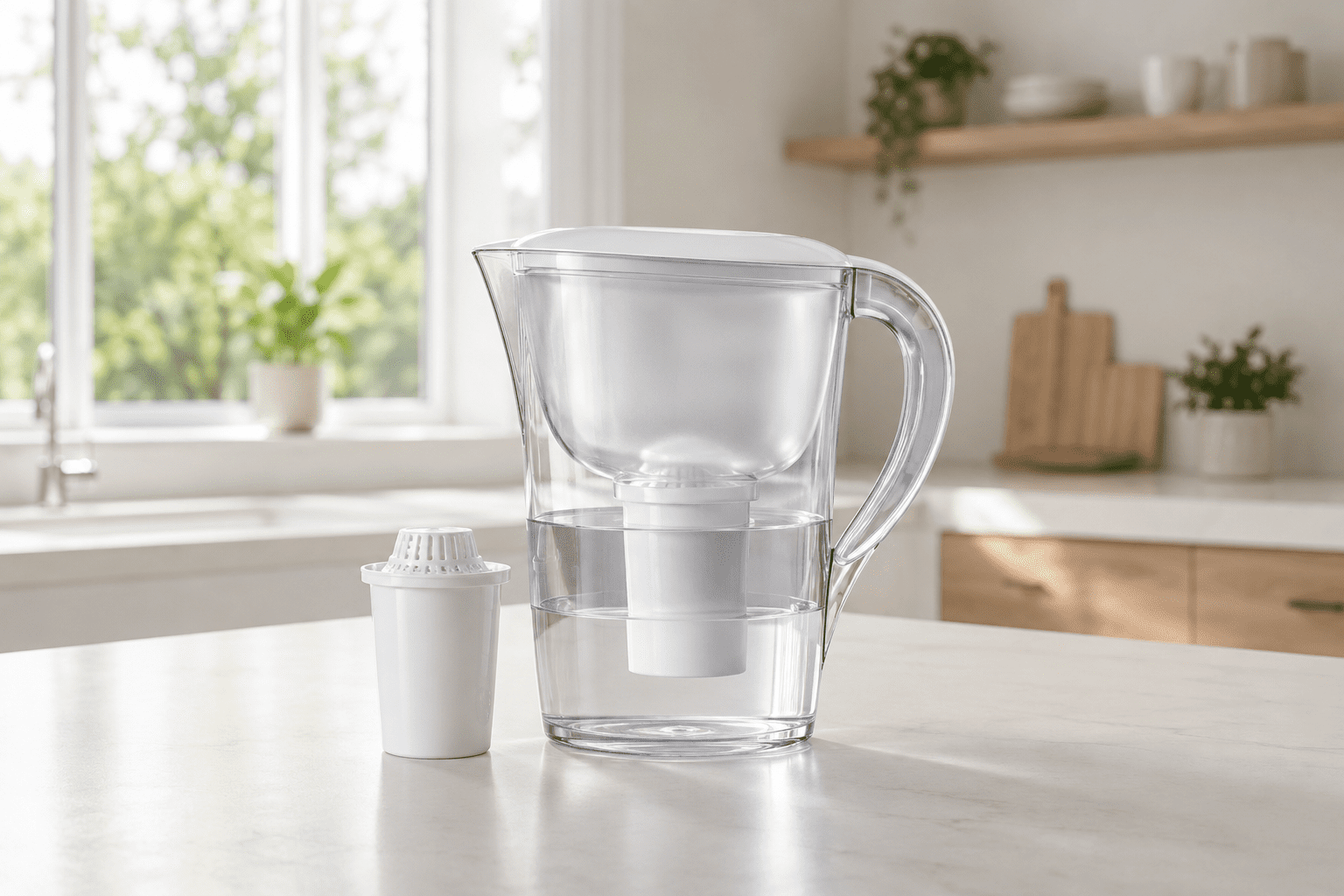
Signs Your Water Filter May Need Replacing
Many people notice subtle changes before realizing the filter is overdue for replacement.
Common signs include:
1. Slower Filtration
If water suddenly takes much longer to pass through the filter, buildup inside the cartridge may be restricting flow.
2. Chlorine Taste Returning
One of the first noticeable changes is often the return of chlorine smell or aftertaste.
3. Metallic or Unpleasant Flavor
A filter nearing the end of its lifespan may no longer reduce certain taste-related compounds effectively.
4. Cloudier Water Appearance
Although not always dangerous, changes in water clarity can sometimes indicate the filter is becoming less effective.
5. Filter Change Indicator Activates
Some modern pitchers include built-in replacement reminders or digital indicators based on estimated usage.
These tools help households maintain more consistent filter schedules.
Why Delaying Filter Changes Can Reduce Performance
Many people try to extend filter life longer than recommended to save money.
While occasional short delays may not immediately create major problems, extremely old filters generally become less reliable over time.
This can lead to:
- reduced taste improvement
- inconsistent filtration
- slower pouring speed
- less effective odor reduction
In some situations, trapped particles and buildup may also affect overall filtration efficiency. Regular replacement helps maintain more predictable results.
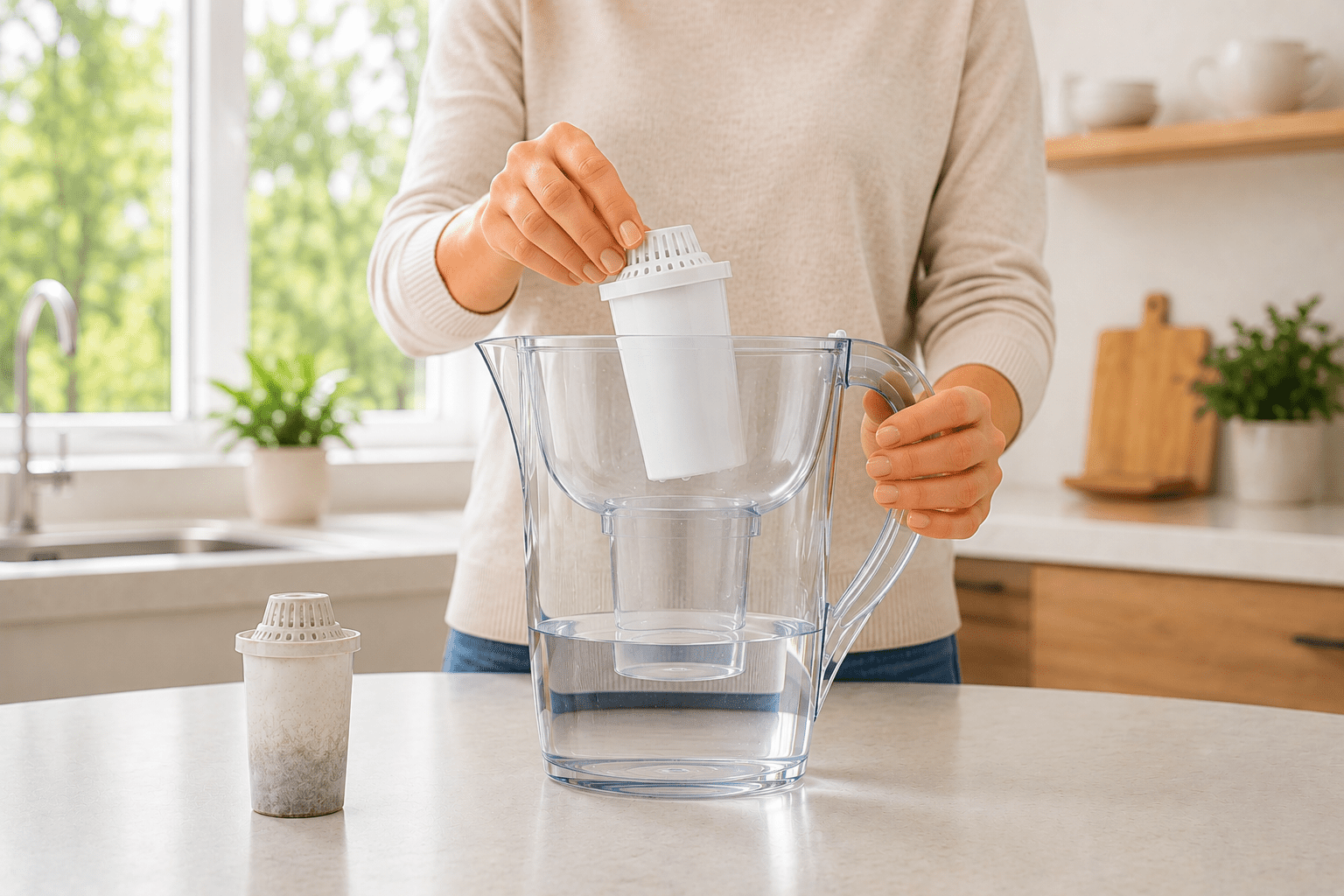
Water Quality Affects Filter Lifespan
Not all tap water affects filters the same way. Homes with higher sediment levels or stronger chlorine treatment may wear filters out faster, especially in older municipal systems. Aging plumbing can also increase buildup inside filters over time. That’s one reason replacement timing varies so much between households, even when using the same pitcher model.
If your tap water frequently changes smell or taste, you can also read: Tap Water Taste Explained: Why Water Smells or Tastes Different
Some Households Replace Filters Earlier
Some households eventually upgrade to larger-capacity or longer-lasting filtration models depending on daily water usage. You can also explore Best Water Filter Pitchers for Everyday Home Use to compare common options used in kitchens, apartments, and family homes.
This is especially common in:
- large households
- warm climates
- homes with noticeable chlorine odor
- areas with harder water
- households using pitchers heavily every day
The goal for many users is not perfect purification, but more consistent everyday drinking water quality.
Proper Filter Storage Also Matters
Replacement filters work best when stored properly before use.
Most manufacturers recommend:
- keeping unused filters sealed
- storing them in a cool dry place
- avoiding contamination before installation
After installation, pitchers themselves should also be cleaned regularly to help maintain freshness. Even a new filter performs better inside a clean pitcher reservoir.
Replacing Filters Regularly Helps Maintain Better-Tasting Water
Water filter pitchers are designed to improve everyday drinking water, but the filter itself requires regular attention to continue working effectively.
If you’re still deciding between filtration types, you can also compare Water Filter Pitcher vs Faucet Filter: Which Fits Everyday Use Better? to understand the differences in maintenance, convenience, and everyday use.
Replacing filters on schedule helps maintain cleaner taste, more consistent water flow, and a fresher overall drinking experience.
For many households, simple maintenance is what makes a basic water filter pitcher continue feeling useful long-term.
Smaller homes and apartments sometimes prioritize compact pitcher size and refrigerator fit over filtration capacity. If space is limited, you can also read How to Choose a Water Filter Pitcher for Small Kitchens and Apartments.